Knowing how the brain functions can help you perform better in life and design better learning resources. There’s a difference between knowing how or why something works and why you’re learning.
Online Courses in Bahrain. As the saying goes, give a man a fish vs teach a man to fish.
It’s like getting to the root, deep into the operating system of learning itself. For many years, people thought the brain, or intelligence, was hardwired and mostly inherited, with a fixed number of neurons. But all of that changed when it became feasible to monitor the brain and see how it responded to what it saw and what it was asked to accomplish. This demonstrated that the brain may produce new cells not only in childhood but also in adulthood.
This is not to say that some people aren’t “brighter” than others; it’s estimated that 50%/60% of IQ is genetic, but that assumes your brain can’t change.
Think of your brain as being more elastic than you, well, think.
Understanding how the brain works can help you rewire it. Evidence supports the assumption that students who are conscious of how they learn will reflect on their actions. This naturally promotes the growth of additional cells. Although there is still much we don’t know about the brain, let’s try to unpack some of the mysteries surrounding learning.

What Happens In Your Brain While Learning Takes Place?
The brain is largely made up of approximately 85 billion neurons, which is greater than the number of stars visible in the night sky with the naked eye. A neuron is a cell that works as a messenger, conveying information to other neurons in the form of nerve impulses (similar to electrical signals). When a person writes, for example, some neurons in your brain convey the message “move fingers” to other neurons, and this message then travels through the nerves (like cables) to the fingers. The electrical signals that travel from one neuron to the next are thus responsible for everything a person does: write, think, see, jump, talk, compute, and so on. Each neuron can communicate with up to 10,000 other neurons, resulting in a massive number of connections in the brain that resemble a dense spider web.
When a person learns, the brain undergoes significant changes, including the formation of new connections between neurons. This is known as neuroplasticity. This is the ability of the brain to alter, that is, to form, strengthen, weaken, or break down connections between neurons. These connections become stronger as you practise. Messages (nerve impulses) are sent faster and more efficiently as your connections improve. That is how you improve at anything you learn, whether it is football, reading, sketching, or anything else. We can compare the connections between your neurons to forest paths. It’s tough to walk through a forest without a trail since you have to condense and push the plants and branches out of the way to cut your way through. However, the more you use the same track, the easier it becomes. When you stop using the trail, the foliage grows back and the trail eventually disappears. This is quite similar to what happens in your brain when you stop doing something — when you stop doing something, the connections between your neurons weaken and can eventually be disassembled or eliminated. That is why, if you have not read during the holidays, it may appear tough to resume reading when school starts again. However, certain neural networks might become so powerful that the traces or connections never totally dissipate.
The fact that learning rewires your neurons demonstrates how dynamic (plastic) your brain is — that it evolves rather than remaining fixed. Repeatedly practising or rehearsing activates your neurons and causes you to learn. These changes begin as soon as a newborn is conceived and continue throughout a person’s life. So, how can you help your neurons build and strengthen their connections?

How The Brain Is Constantly Changing
Neuroplasticity
Neuroplasticity refers to the brain’s ability to constantly modify itself by establishing new neural connections and removing those that are no longer used. Prolonged adult learning and emotional intelligence can be brought about by encouraging the brain’s neuroplasticity.
Tackling sudoku or a crossword puzzle daily isn’t enough to keep your brain malleable. Sustained practice of a new action that adequately challenges the brain to think in a new way is required for the brain to rewire itself. Consider how tough it is to learn a new language or play a new instrument; this is how hard your brain must work to drive growth and construct new neural pathways.
Brain Agility
Reframing your present attitude to events and boosting underutilised brain processes will help maximise brain performance across various and unfamiliar tasks.
Putting your brain outside of its comfort zone and working on the skills you know you struggle with can help the brain become more adaptable and resilient to switching tasks and focusing.
We have all developed specific talents based on the daily demands placed on our brains at work and at home, but as the world of work changes, our brains will need to constantly renew our skills and be adaptive to new situations and ways of thinking.
Developing an agile brain may be more crucial than you realise. As more tasks associated with systematic thinking are automated, people and groups will need to refine their skills to think creatively, intuitively, and empathetically to survive in shifting labour markets.
Mindset Mastery
According to a recent theory proposed by Stanford professor Carol Dweck, most people’s brains can be classified as either fixed or developing mindsets. A fixed mindset avoids new obstacles because they are afraid of failing, whereas a growth mindset sees new everyday problems as chances to be seized and embraced as part of a larger learning process. Those with a fixed mindset believe that talents and abilities are natural, whereas Dweck contends that most successful people have a growth mindset and a lifelong drive to learn and develop personally.
As we get older, it can seem more difficult and futile to try new things that we fear we will fail at; nevertheless, by becoming conscious of our aversion to change, we can train ourselves to conquer this resistance and expose ourselves to new activities.
Instead of shunning a new pastime or interest you’ve always wanted to try because you’re afraid of failing, push yourself out of your comfort zone and give it a shot. You might be astonished at how new ways of thinking emerge via trial and error, and how this improves your resilience and adaptability.
Simplicity
Putting a stop to our frantic daily lives and simplifying our brain’s activity can have an unexpected impact on its potential to grow and evolve.
In the act of mindfulness, we can focus all of our attention on the current moment and our breathing, which can have both long and short-term physical advantages on the brain. In the short term, it will reduce our stress by lowering blood levels of the stress hormone cortisol.
Longer term, regular practice (three times per week) will result in enhanced gyrification — the production of additional folds in the prefrontal cortex. This is significant because the prefrontal cortex is involved with our higher executive skills, such as our ability to think flexibly and creatively, switch between tasks, and make sound judgments. Try to include some mindfulness into your everyday routine.
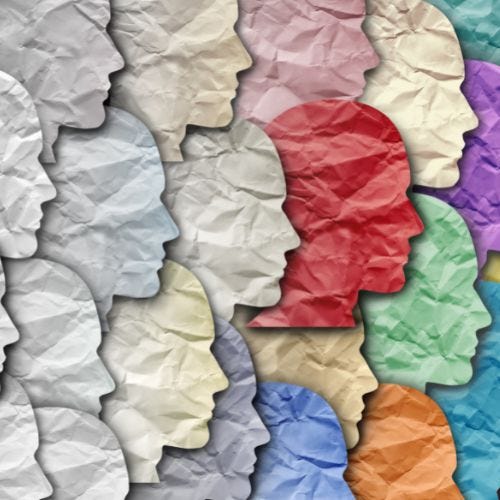
The Mind, Brain And Body Are Connected
Physical and mental health are inextricably intertwined. Research repeatedly shows links between psychosocial constructs (such as stress, anxiety, and adversity) and physical health (e.g., neurocognitive development, and chronic medical conditions). While the mechanisms underlying those relationships are still unknown, new research has shown that the brain-gut-microbiome axis and immune system, among others, play a role.
Activities involving the mind-body link should be included in treatment programmes for mental health and substance abuse. Physical and emotional health are inextricably linked, and you can improve one by treating the other. You can incorporate mind-brain-body principles into your treatment plan throughout mental health and addiction treatment. These crucial mind-body therapies can provide you with additional tools for your rehabilitation.

Tackle Short Attention Spans With Repetition For Better Learning
If our decreased attention spans with repetition are to help us focus on the most significant and urgent activity on our plates, then we should be continuously attending to the most meaningful and urgent item on our plates. However, this may be extremely rare. Overcoming our desire for instant fulfilment allows us to focus on what genuinely matters to us. We can manage external circumstances, such as keeping our phones away from us when we need to focus on work, or setting deadlines and daily to-do lists, to reduce the clutter in our thoughts.
The most successful approach, though, may simply be to connect a strong emotion to our long-term goals. Don’t blame it on a reduced attention span the next time your mind wanders when you need to stay focused. Remind yourself of why you want to achieve it so desperately and the things that are important to you. We might be able to teach our minds to focus on a longer time horizon gradually.

Find The Learning Strategies That Work For Your Brain
Many people are visual learners, meaning they absorb and recall knowledge better when they see it. In a virtual situation, adding visual context to courses, such as breaking up your slides with a GIF that brings students’ attention back during a lecture or finding a brief video of the scientific principles you’re talking about, are simple strategies to maintain students’ attention remotely. Other interesting methods to include visual aspects into your teaching include changing a Zoom background to match the theme of a lecture or donning a goofy hat or fancy necktie.
Brain breaks are an excellent technique to get your pupils up and moving while also increasing brain activity. You might be aware of how fidgety your students become when sitting at their desks for extended periods, so introducing some movement into the day can help. Fortunately, brain breaks are simple to deploy in any room setting and require little to no setup.

Website: https://uplyrn.com
LinkedIn: https://linkedin.com/company/uplyrn
Instagram: https://instagram.com/uplyrn_sg
Facebook: https://facebook.com/uplyrn
YouTube: https://www.youtube.com/channel/UC4IGNF_KBI8q04Rle_Zp2Uw
Comments
Post a Comment